

Fairy tales. Nearly everyone has heard some version, whether it’s “Cinderella” or the Swedish story “Peter and the Magic Thread.” What makes these stories so appealing? I think it’s because they reflect something deep in our hearts: a world where justice is rewarded, love is sacrificial, and good triumphs over evil. Fairy tales offer a glimpse of a life where fairness, kindness, and courage are recognized. They give hope that even in dark moments, love can win.
Life is rarely as tidy as a storybook, and “happily ever after” often feels out of reach. But sometimes, real stories do sound a little like fairy tales. I believe mine is one of them.
Choosing an open adoption
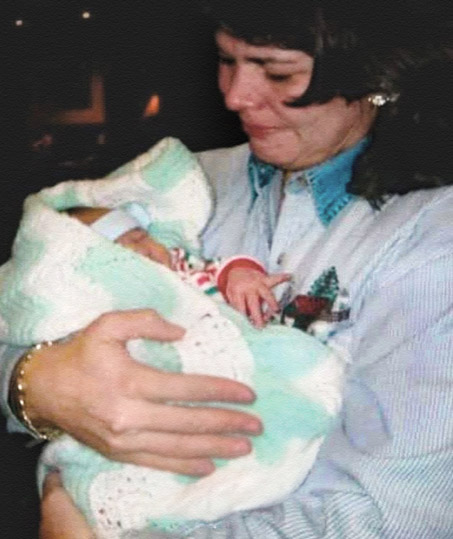
My mother, Katie, was only 17 when she discovered she was pregnant. Terrified and without my father in the picture, she clung to her determination to raise her little girl. Her parents encouraged her to think carefully about what that would mean, reminding her of the immense responsibility she would bear. Katie remained firm, but as her due date approached, reality pressed in. She loved me deeply, yet she recognized that she could not provide the stability, resources, and guidance a child deserves. Though her heart ached, she knew she needed to consider what would truly be best—not for her, but for me.
The decision was neither simple nor easy. Katie wrestled with guilt, fear, and longing. She pictured the life she wished she could give me, and then she imagined a life where I could thrive in a family equipped to provide opportunities she could not yet offer. Adoption, she realized, was not a failure but an act of profound love. She wanted me to have every chance to flourish, even if it meant stepping back. It was a choice born from courage, selflessness, and hope.
Through an adoption agency, Katie reviewed the profiles of prospective families. One family stood out: a lawyer father, a doctor mother, and a little boy they had adopted at birth. Something in her heart told her this was right.
When I was born in 2005, that family—Glen, Rebecca, and their son—joyfully welcomed me into their arms at the hospital.
Expanding the circle of love
It might seem like the story ended there, but that was only the beginning. From my earliest days, Katie was present in my life. She came to birthday parties, school performances, and Sunday dinners. I grew up knowing my half brothers and sharing in Katie’s love for writing, baking, and music. She taught me lessons in patience and creativity, sometimes through awkward or funny moments, but always with love. One memory I cherish is decorating my birthday cake, laughing as I accidentally messed up a snowflake. Those moments, small but meaningful, shaped the bond we share today.
When people hear the term “open adoption,” they often imagine letters or occasional visits. For me, it was a real, living connection. Katie was more than a visitor; she was a mentor, a confidante, and in many ways, an older sister. She is the one ready with a cup of tea and advice when I face difficult decisions, helping me find logic and perspective in my thoughts and choices.
My adoptive parents, too, approached adoption with a generosity of spirit. They believed that adoption was not about replacing one family with another, but about expanding the circle of love. My mom often said, “More people loving my kids cannot be a bad thing.” Their open hearts allowed me to experience something rare: the security of my parents’ love and the gift of a birth mother who cared deeply for me. Dinners after church, violin recitals, debate tournaments—Katie was present for so much of it.
Of course, adoption is not without its challenges. Even when a baby is placed with a family at birth, emotions and questions linger. I sometimes struggled with identity and belonging, and like any family, ours had disagreements. But these struggles do not define my story; they enrich it, giving depth to the love and resilience I have experienced.
Better than happily ever after
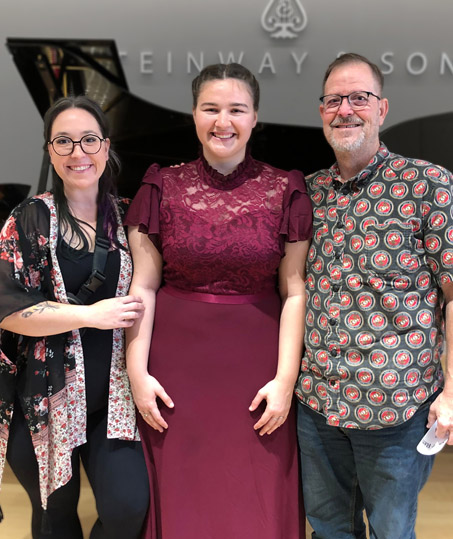
Why do I still compare my story to a fairy tale? Because it carries all the themes that resonate so profoundly in the human soul: justice, sacrifice, and a love stronger than fear. Fairy tales remind us that light can overcome darkness. My adoption is proof of that truth. Katie’s courageous choice gave me life and a future. My parents’ embrace gave me a home. Together, their love reflects something greater than all of us: the faithfulness of God, who can bring beauty from uncertainty and hope from fear.
In a culture that often tells young women that abortion is the only way forward, Katie’s decision stands as a powerful witness. At 17, she chose life. She chose love. And because of that choice, I not only have the gift of life, but the joy of knowing her as well. My parents, in turn, chose to open their arms not only to me, but to Katie. Their willingness to embrace adoption with generosity shaped my childhood into something rich, unique, and full of love.
Stories like mine are a reminder that life is precious, even when the beginning seems uncertain or difficult. They show that love can be sacrificial and brave and that connections forged through care and intentionality endure. My life has been blessed by the choices of people who loved me before I could even speak. It has been shaped by courage, hope, devotion, and a commitment to celebrating life in its most vulnerable and beautiful moments.
If there is just one thing I hope to impart with my story, it is this: It is imperfect, but it is also unfinished. And sometimes, the best stories are the ones still being written. Mine is not a tale of loss or despair, but of courage, sacrifice, and God’s grace woven together. While fairy tales end with “happily ever after,” real stories—stories like mine—remind us of something even more powerful: Every life, no matter how uncertain its beginning, is a gift worth celebrating.
SIDEBAR: Choosing Life, Choosing Love
Tragically, many pregnant mothers think abortion is their only option. A 2023 survey found that 60% of post-abortive mothers would have chosen life if they had had more financial security or emotional support.
But the truth is that help is available for pregnant women in need. Thousands of pregnancy help centers across the country offer healthcare services, baby supplies, emotional and educational support, housing, and more—all at little or no cost to the mother. Other pro-life organizations offer financial assistance, community support, and tangible solutions to the challenges that lead a mother to choose abortion.
Additionally, when mothers like Katie realize that parenting isn’t the best option for them or their babies, adoption is a beautiful alternative. Mothers can choose an adoption agency that shares their values and helps them find families that do the same. Holy Family Catholic Adoption Agency, for example, helps birth mothers find adoptive families who are devoted to their Catholic faith. Nightlight Christian Adoptions is another faith-based adoption agency. Many Catholic churches also offer adoption services through diocesan-run agencies.
Through adoption, a mother can choose the family she wants for her baby and decide how involved she wants to be in the child’s life. An open adoption, like Emily’s, allows families to build a relationship that meets the needs of the child and the birth and adoptive parents. A closed adoption keeps birth parents anonymous. Mothers and adoptive families can also create a semi-open arrangement that better meets everyone’s needs.
A mother’s love for her child knows no bounds. When she cannot give her baby the life she wants for him, adoption is a loving choice—for children, birth mothers, and adoptive families.

Facebook Comments