
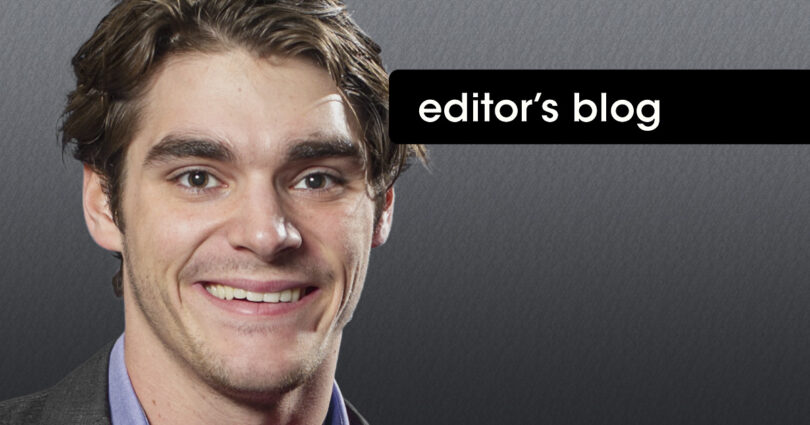
Millions of people around the world were saddened by the suicide death of actor RJ Mitte on Monday. Mitte played several roles but most famously was the son of Walter White on Breaking Bad.
Diagnosed with cerebral palsy at age three, Mitte said he got into acting to meet other kids his age. He ended up showing the world that people with disabilities are not to be feared or shunned. He once said, “People perceive disability as a weakness, as an illness, as something that needs to be cured, and we need to fight against that.”
Throughout his career, he was an advocate for those with disabilities, and according to NBC News, Mitte once said, “I’m lucky that I can be an advocate. I’m lucky that I can do what I do and talk to the people I get to talk to.” He continued, “I think we all have an obligation to have an impact for the positive.”
We may never know why he was so despondent or what caused him to take his own life, and it would be wrong to speculate. As Atticus Finch famously said, “You never really understand a person until you consider things from his point of view . . . until you climb into his skin and walk around in it.”
People fight silent battles all the time. Life is hard. Life is messy. And when you live with a chronic illness or disability, it can be extremely difficult.
But I have to wonder about a culture that mourns the loss of someone like Mitte who took his own life but that also champions assisted suicide. On the one hand, society laments suicide, posts suicide prevention hotline numbers all over social media, and offers “trigger” warnings when talking about suicide. Yet on the other hand, it advocates for death on your own terms. The disconnect cannot be any clearer.
In the US, 13 states and the District of Columbia allow assisted suicide, with 16 more considering it. Calling it “death with dignity,” these states champion the “right” of a sick or dying person to end their life prematurely.
Canada has some of the weakest requirements for its Medical Aid in Dying laws. In 2024 (the latest year when statistics are available), 16,499 people received MAID.
Recent news includes the death of a 26-year-old Canadian man who, according to Yahoo News “had type 1 diabetes, partial blindness and depression,” and who “was approved for the government euthanasia scheme despite his mother Margaret Marsilla’s protests.” Kiano Vafaeian died late last year, and his mother stated that his death was “disgusting on every level.”
And more recently, we saw the incredibly disturbing news of a one-year-old child in the Netherlands who was killed by euthanasia. CBS News reported that “the child, whose sex and identity have not been disclosed, had extensive and irreversible brain damage, severe cerebral palsy, epilepsy and visual impairment.”
A child.
What’s equally disturbing are comments from the doctor who took the child’s life. Describing the death as “a kind of emancipation,” he said, “I think there are parents out there who have never dared to discuss the option of ending their [child’s] lives before. . . . Hopefully, this ruling provides support to these parents to discuss this option with their treating physician.”
What is the message that someone is supposed to hear when they are dealing with their own tragic circumstances? What they likely hear is that some lives are valuable and some are not, and there’s no rhyme or reason to it—only personal preference.
If you don’t want your preborn baby, kill him. It’s your “choice.” If Grandma is old and sick, kill her with this injection. It’s “mercy.” If your brother is facing a lifetime of disability-related problems, tell him he can die on his own terms.
This mentality treats people like commodities, who are only useful if they are convenient or if they are perfectly healthy. Further, it attempts to strip them of their dignity, and when people facing personal mental or physical health crises see news of people “dying with dignity,” they internalize society’s assignment of values and begin to see themselves as less valuable because of their suffering.
But all life is precious, and no one is perfect.
The world rightly responded with sadness when Mitte took his own life. Likewise, it should respond with this same sadness when preborn babies are torn apart and when the elderly and sick are put to death.
Suicide and assisted suicide are the same thing, but society doesn’t treat them the same, and it makes no sense. Chances are, many people would have championed for Mitte’s death if he had traveled to one of the states where assisted suicide is legal and taken his life by a lethal injection. They would have rallied behind him and proclaimed it his right. But when done in the privacy of his own home, these same people cry out about how sad it is.
Yes, it absolutely is sad, but all suicide—no matter the form—is tragic.
If we want to change our culture, we need to stop treating people like burdens when they are sick or when they need help, and we need to care for those around us with love and see them through God’s eyes. That means we live selflessly and give our time and our efforts to those who need it. And it means that we stop electing people who push these culture-of-death ideologies on society. Only when we do so will our culture actually acknowledge the value of all people, regardless of ability. And then we will be doing what Mitte said was so important to him—making “an impact for the positive.”
This article was first printed in LifeSiteNews at lifesitenews.com/opinion/tragic-death-of-breaking-bad-actor-exposes-our-double-standard-on-suicide/?utm_source=featured-news.

Facebook Comments